Wiki on Tang Dynasty
Knowledge Base on China Tang Dynasty
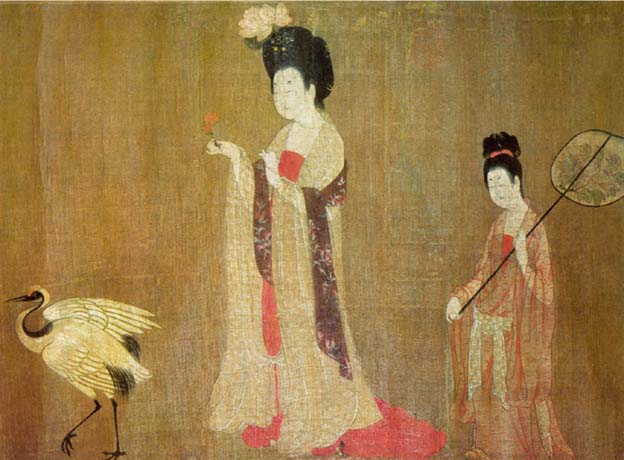
Chinese culture flourished and further matured during the Tang era. Historians generally regard the Tang as a high point in Chinese civilisation, and a golden age of cosmopolitan culture.
Knowledge Base on China Tang Dynasty
Chinese culture flourished and further matured during the Tang era. Historians generally regard the Tang as a high point in Chinese civilisation, and a golden age of cosmopolitan culture.
In Chinese history, a Taishang Huang or Taishang Huangdi is an honorific and institution of a retired emperor. The former emperor had, at least in name, abdicated in favor…
Silla was a Korean kingdom that existed between 57 BCE and 935 CE and was located on the southern and central parts of the Korean peninsula. Silla, along with Baekje and G…
Taoism or Daoism is a philosophical and religious tradition indigenous to China, emphasizing harmony with the Tao 道. With a range of meaning in Chinese philosophy, transl…
The Leshan Giant Buddha is a 71-meter (233 ft) tall stone statue, built between 713 and 803 (during the Tang dynasty). It is carved out of a cliff face of Cretaceous red b…
The Yellow Sea (simplified Chinese: 黄海; pinyin: Huáng Hǎi), also known as the North Sea, is a marginal sea of the Western Pacific Ocean located between mainland China a…
The Huai River, formerly romanized as the Hwai, is a major river in East China, about 1,110 km (690 mi) long with a drainage area of 174,000 km2 (67,000 sq mi). It is loca…
The Western Turkic Khaganate (Chinese: 西突厥; pinyin: Xī Tūjué) or Onoq Khaganate, was a Turkic khaganate in Eurasia, which formed as a result of the wars during the be…
Yuejueshu 越絕書 "End of the kingdom of Yue" is a history of the regional state of Yue 越 during the Eastern Zhou period 東周 (770-221 BCE). The 19-juan long boo…
Sancai (Chinese: 三彩; pinyin: sāncǎi) is a versatile type of decoration on Chinese pottery and other painted pieces using glazes or slip, predominantly in the three col…
The Yangtze River, Yangzi River or Chang Jiang (simplified Chinese: 长江; pinyin: Cháng Jiāng) is the longest river in China and the third-longest river in the world. It …
The Xianbei (simplified Chinese: 鲜卑; pinyin: Xiānbēi) were an ancient nomadic people in northern East Asia who developed a distinct cultural and political identity by …
Woodblock printing or block printing is a technique for printing text, images or patterns used widely throughout East Asia and originating in China in antiquity as a metho…
The pipa (Chinese: 琵琶; pinyin: pípá) is a traditional Chinese musical instrument belonging to the plucked category of instruments. Sometimes called the "Chinese lut…
The Silk Road derives its name from the highly lucrative trade of silk textiles that were primarily produced in China. The network began with the expansion of the Han dyna…
Chang'an, located in China's Shaanxi Province, was the capital city of several Chinese dynasties, including the Western Han and the Tang, from 202 BC to AD 907. At various…
The Tang Dynasty History & Timeline