Tang Dynasty: The Pulsating Heart of the Ancient World
If you were seeking the center of the world in the 8th century, all compasses would point to Chang'an. This was more than a metropolis of a million souls; it was a grand social experiment in Radical Inclusion. Here, Persian merchants and Tang poets shared the same moonlight; the haunting strings of Central Asian lutes intertwined with the native songs of Qin on the Great Zhuque Avenue.
The bells of the Silk Road camels carried the monsoons of the East all the way to the distant Red Sea. We created this Wiki to restore a golden era defined by "daring to imagine, daring to set forth, and daring to define beauty."
Why Tang? The Highlights
The Global Hub
Chang'an was the world's first city with a million people, hosting residents from over 70 different countries.
Female Empowerment
A golden age of social freedom, where women held high status, competed in polo matches, and defined the era's avant-garde fashion.
Poetry as Life
Over 48,000 poems survive. Poetry wasn't just art; it was a requirement for government officials.
Silk Silicon Valley
Pioneer of tea culture, porcelain trade, and block printing—shaping the modern world's DNA.
The Tang Record
Pioneering the Future of the 8th Century
China's Only Female Emperor
Wu Zetian: Redefining power and gender in an imperial world.
Read Biography →The World's First Printed Book
The Diamond Sutra: The dawn of mass communication and block printing.
Explore Technology →The First Monograph on Tea
Lu Yu's "The Classic of Tea": How a single leaf reshaped global economy.
Discover Tea Culture →World’s Earliest Newspaper
Kaiyuan Za Bao: The precursor to modern journalism in the 8th century.
View Media History →World’s Longest Canal System
The Grand Canal: Connecting the empire’s soul through water network.
Trace Geography →First Legal Code for Foreigners
The Tang Code: A pioneer in international law and minority rights.
Study the Laws →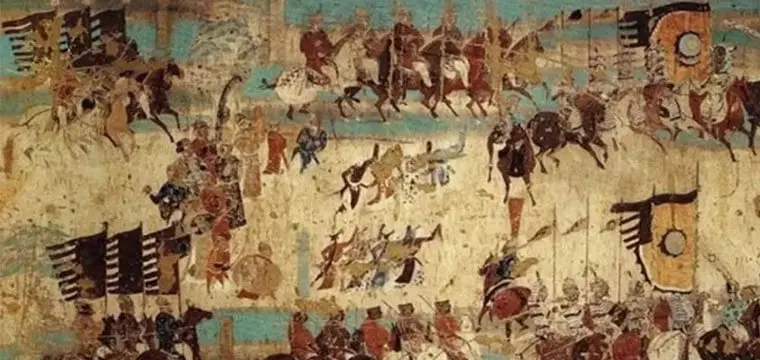
The frontier guardians: Explore how regional military governors shifted the balance of power from the imperial court to the borders.
The Blueprint of Power
From the administrative bedrock of the "Reign of Zhenguan" to the frontier winds of the Jiedushi. Witness how the Tang constructed an "Imperial Brain" through a rigorous meritocracy and the Three Departments system.
The Texture of Lifestyle
Life in the Tang was never dull. It was the aroma of boiled tea at dawn, the thunder of polo matches in the afternoon, the whirling dances of Sogdian girls in city taverns, and the ultimate aesthetic of "clouds for robes and flowers for a face."
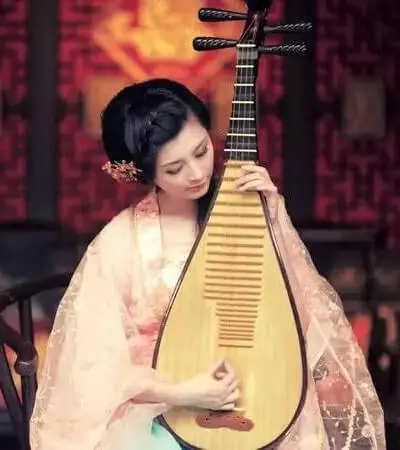
The soul of Tang ensemble music and a symbol of cosmopolitan culture.
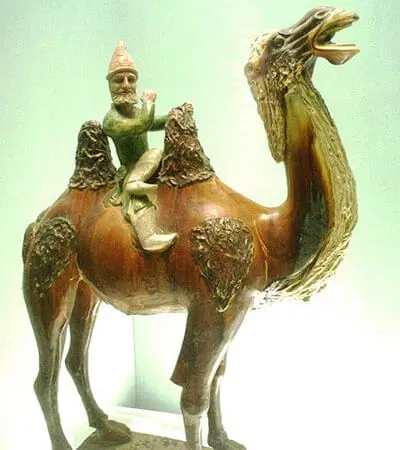
The vibrant soul of Tang burial and ritual art: Discover the alchemy of lead-glazing that defined an era’s aesthetic.
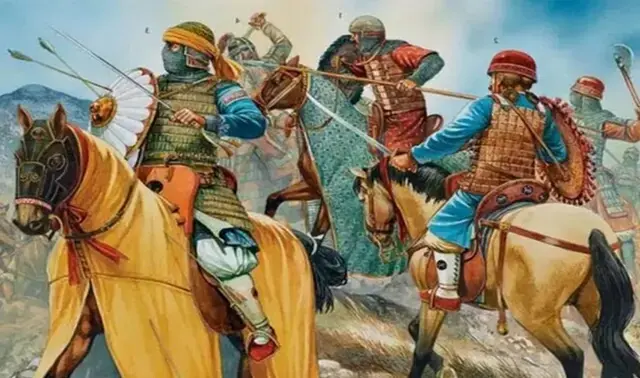
Steel and Horizon
Where the Tang Dao pointed, the horizon had no bounds. In the dust-blown Western Regions, generals wrote epics of courage. From the fall of the Western Turks to the steadfast defense of the Anxi Garrisons.
The Spiritual Heritage
The footsteps of Xuanzang, the wild songs of Li Bai, and the vibrant murals of the Mogao Caves. This was an era of defenseless thought, where Buddhism, Taoism, and Confucianism collided.
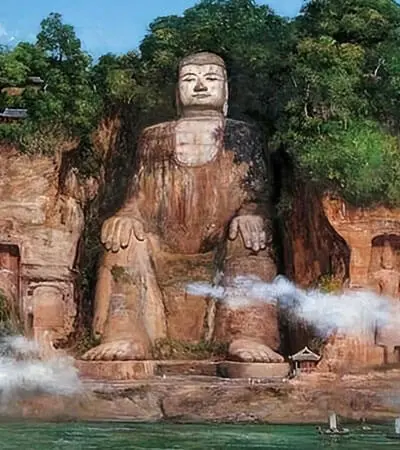
The pinnacle of Tang architectural ambition: A 71-meter stone colossus carved into the Lingyun cliffs to tame the turbulent river currents below.
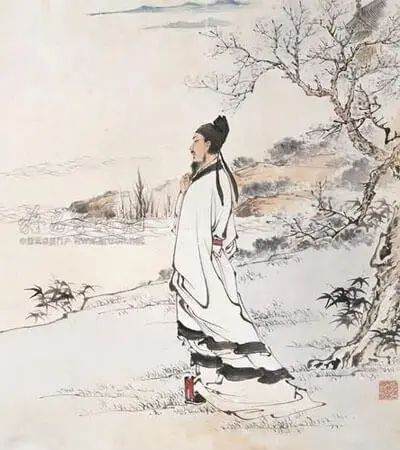
The Veins of Empire
When you gaze upon the waves of the Yellow Sea or the ancient flow of the Huai River, you are touching the beating pulse of the Tang. Every inch of land witnessed an empire that stood open to the world.
The Archive Registry
New discoveries and insights added to the TANG Wiki.
An Lushan rebellion
The An Lushan rebellion was a civil war in China that lasted from 755 to 76…
Read More →Shangguan Wan'er
Shangguan Wan'er (c.664 – 21 July 710) was a Chinese politician, poet, and…
Read More →