Woodblock printing
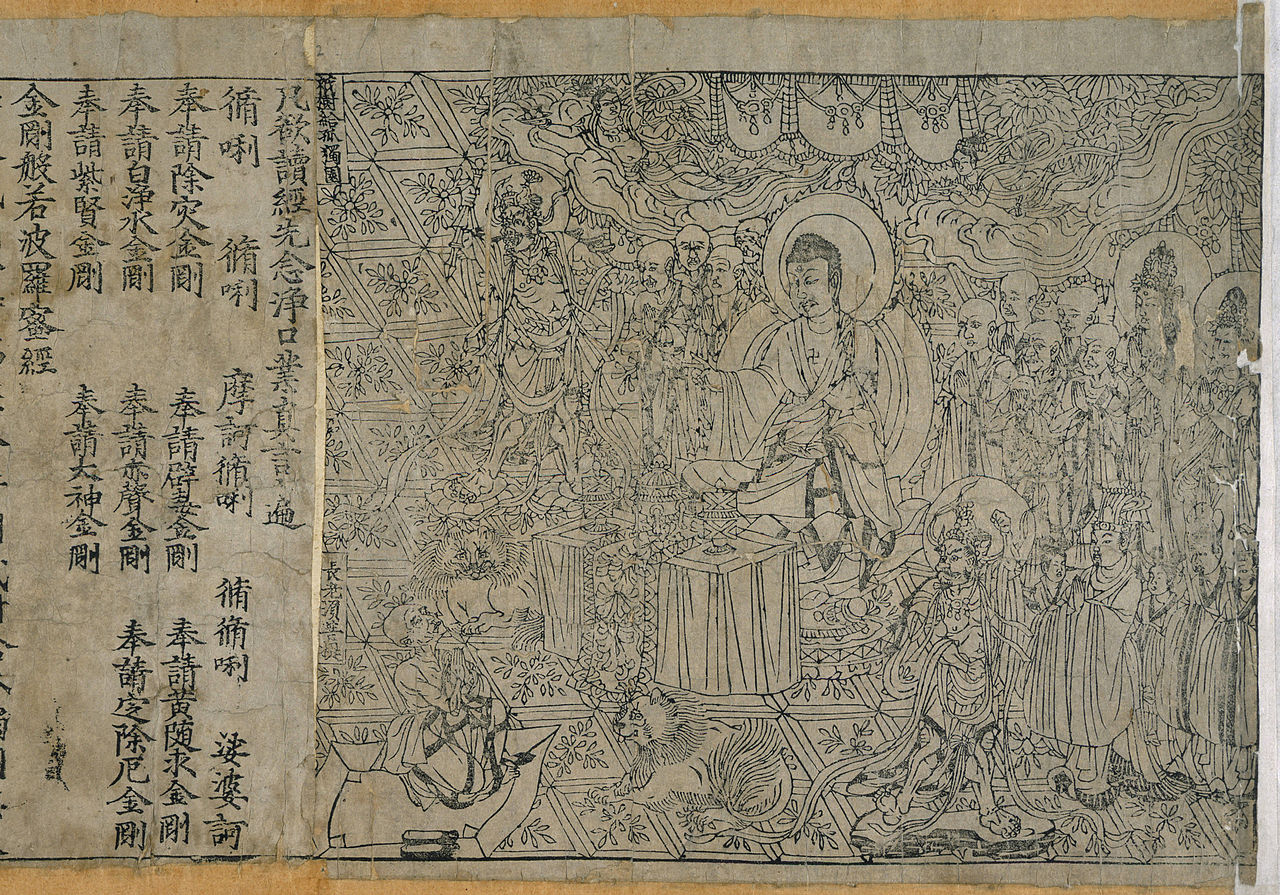
Woodblock printing or block printing is a technique for printing text, images or patterns used widely throughout East Asia and originating in China in antiquity as a method of printing on textiles and later on paper. Each page or image is created by carving a wooden block to leave only some areas and lines at the original level; it is these that are inked and show in the print, in a relief printing process. Carving the blocks is skilled and laborious work, but a large number of impressions can then be printed.
As a method of printing on cloth, the earliest surviving examples from China date to before 220 AD. Woodblock printing existed in Tang China by the 7th century AD and remained the most common East Asian method of printing books and other texts, as well as images, until the 19th century. Ukiyo-e is the best-known type of Japanese woodblock art print. Most European uses of the technique for printing images on paper are covered by the art term woodcut, except for the block books produced mainly in the 15th century.
What You'll Get

Taishang Huang
In Chinese history, a Taishang Huang or Taishang Huangdi is an honorifi…
Silla
Silla was a Korean kingdom that existed between 57 BCE and 935 CE and w…
Taoism
Taoism or Daoism is a philosophical and religious tradition indigenous …
Leshan Giant Buddha
The Leshan Giant Buddha is a 71-meter (233 ft) tall stone statue, built…
Yellow Sea
The Yellow Sea (simplified Chinese: 黄海; pinyin: Huáng Hǎi), also kno…
Huai River
The Huai River, formerly romanized as the Hwai, is a major river in Eas…
Western Turks
The Western Turkic Khaganate (Chinese: 西突厥; pinyin: Xī Tūjué) or O…
Yue Jue Shu
Yuejueshu 越絕書 "End of the kingdom of Yue" is a history of …
Sancai
Sancai (Chinese: 三彩; pinyin: sāncǎi) is a versatile type of decorat…
Yangtze River
The Yangtze River, Yangzi River or Chang Jiang (simplified Chinese: 长江…