Wiki on Tang Dynasty
Knowledge Base on China Tang Dynasty
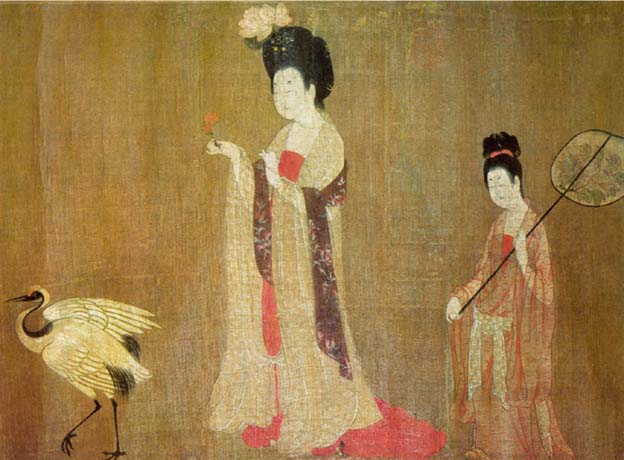
Chinese culture flourished and further matured during the Tang era. Historians generally regard the Tang as a high point in Chinese civilisation, and a golden age of cosmopolitan culture.
Knowledge Base on China Tang Dynasty
Chinese culture flourished and further matured during the Tang era. Historians generally regard the Tang as a high point in Chinese civilisation, and a golden age of cosmopolitan culture.
Liang, known in historiography as the Western Liang (simplified Chinese: 西凉; pinyin: Xī Liáng; 400–421), was a dynastic state of China listed as one of the Sixteen Kin…
In Chinese history, a Taishang Huang or Taishang Huangdi is an honorific and institution of a retired emperor. The former emperor had, at least in name, abdicated in favor…
Silla was a Korean kingdom that existed between 57 BCE and 935 CE and was located on the southern and central parts of the Korean peninsula. Silla, along with Baekje and G…
Shi Siming (Chinese: 史思明) (19th day of the 1st month, 703? – 18 April 761), or Shi Sugan (史窣干), was a Chinese military general, monarch, and politician during the T…
Taoism or Daoism is a philosophical and religious tradition indigenous to China, emphasizing harmony with the Tao 道. With a range of meaning in Chinese philosophy, transl…
Laozi (Chinese: 老子; pinyin: Lǎozǐ) was a legendary Chinese philosopher considered to be the author of the Tao Te Ching (Pinyin: Dào Dé Jīng), one of the foundational …
Li Jing (571 – July 2, 649, courtesy name Yaoshi, posthumous name Duke Jingwu of Wei (also romanized as Duke Jingwu of Wey), was a Chinese military general, strategist, a…
The Leshan Giant Buddha is a 71-meter (233 ft) tall stone statue, built between 713 and 803 (during the Tang dynasty). It is carved out of a cliff face of Cretaceous red b…
The Parthian Empire, also known as the Arsacid Empire, was a major Iranian political and cultural power centered in ancient Iran from 247 BC to 224 AD. Its latter name com…
Gao Xianzhi or Ko Sŏnji (died January 24, 756) was a Tang dynasty general of Goguryeo descent. He was known as a great commander during his lifetime. He is best known for…
The Yellow Sea (simplified Chinese: 黄海; pinyin: Huáng Hǎi), also known as the North Sea, is a marginal sea of the Western Pacific Ocean located between mainland China a…
The Huai River, formerly romanized as the Hwai, is a major river in East China, about 1,110 km (690 mi) long with a drainage area of 174,000 km2 (67,000 sq mi). It is loca…
Jia Dan (simplified Chinese: 贾耽; pinyin: Jiǎ Dān, 730 – 805), courtesy name Dunshi (敦詩) and formally Duke Yuanjing of Wei (魏元靖公), was a Chinese cartographer, mi…
Sulaymān al-Tājir (Arabic: سليمان التاجر, lit. 'Solomon the Merchant') was a 9th-century Muslim merchant, traveler and writer initially from Siraf in modern…
Emperor Taizu of Later Liang (後梁太祖), personal name Zhu Quanzhong (朱全忠) (December 5, 852 – July 18, 912), né Zhu Wen (朱溫), name later changed to Zhu Huang (朱晃),…
The Western Turkic Khaganate (Chinese: 西突厥; pinyin: Xī Tūjué) or Onoq Khaganate, was a Turkic khaganate in Eurasia, which formed as a result of the wars during the be…
The Han dynasty was an imperial dynasty of China (202 BC – 9 AD, 25–220 AD) established by Liu Bang and ruled by the House of Liu. The dynasty was preceded by the short-…
The Five Dynasties and Ten Kingdoms period (Chinese: 五代十國) was an era of political upheaval and division in Imperial China from 907 to 979 AD. Five dynastic states qui…
The Sui dynasty was a Chinese imperial dynasty that ruled from 581 to 618. The re-unification of China proper under the Sui brought the Northern and Southern dynasties era…
Huang Chao (835 – July 13, 884) was a wealthy Chinese salt trader and soldier who is primarily known for instigating the Huang Chao Rebellion. In 878, he proclaimed himse…
Yuejueshu 越絕書 "End of the kingdom of Yue" is a history of the regional state of Yue 越 during the Eastern Zhou period 東周 (770-221 BCE). The 19-juan long boo…
Jianzhen (688–763), also known by his Japanese name Ganjin, was a Tang Chinese monk who helped to propagate Buddhism in Japan. In the eleven years from 743 to 754, Jianzh…
Xuanzang (Chinese: 玄奘; 6 April 602 – 5 February 664), born Chen Hui or Chen Yi (陳褘 / 陳禕), also known by his Sanskrit Dharma name Mokṣadeva, was a 7th-century Chine…
Hou Junji (died April 29, 643) was a Chinese general and official who served as a chancellor during the reign of Emperor Taizong in the Tang dynasty. He is best known for …
The Tang Dynasty History & Timeline