Tang Society
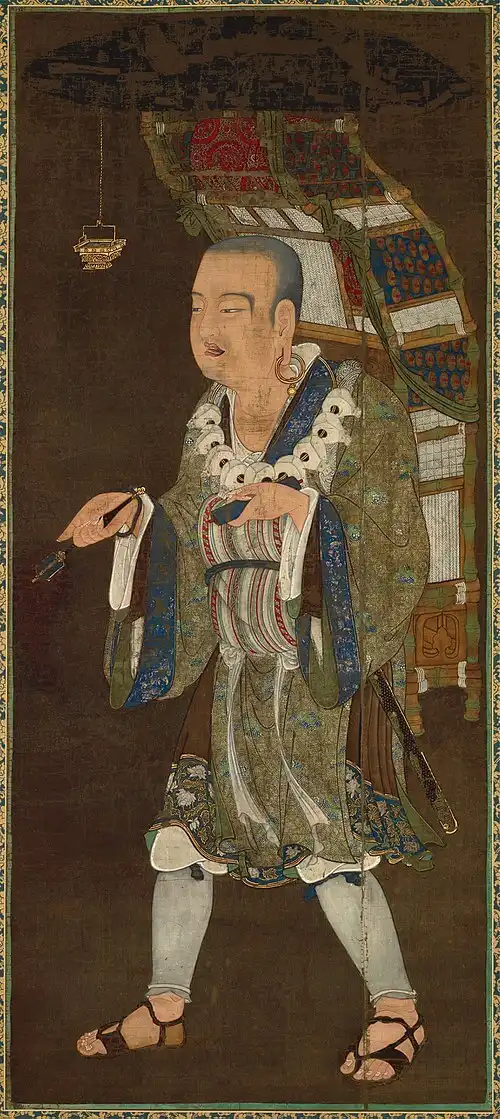
Tang society was the most stratified and the most fluid in the medieval world — a civilization of ranked clans and registered households, of hereditary aristocrats and examination parvenus, of free farmers and unfree servants, bound together by one of history's most sophisticated systems of law, registration, and social mobility. Its structure shaped everything the dynasty did, from its wars and its taxes to its marriages and its rebellions, and its transformation across the three centuries of Tang rule was the deepest social change in medieval China.
The Great Clans and the Court Aristocracy
At the summit of Tang society stood the great clans — the medieval aristocracy whose pedigrees ran back through the Northern dynasties to the Han itself. The Li clan of Zhaojun, the Zheng of Xingyang, the Cui of Boling and Qinghe, the Wang of Taiyuan, the Lu of Fanyang: these families dominated the central government of the early and middle Tang, intermarried with the imperial house, and regarded themselves — with some justice — as the true elect of Chinese civilization. Their weapon was the genealogy: the court itself maintained the ranked register of great clans (the shizu zhi of the dynasty’s statutes), and the fierce battles over the register’s rankings were among the century’s bitterest politics. The early Tang emperors, themselves arrivistes of mixed frontier blood, fought the clans with every instrument at hand — Gaozong banned the private circulation of genealogies, Wu Zetian promoted the examination graduates against them, Taizong’s court waged a famous war over the ranking of the royal Li against the great northeastern families — but the clans’ grip on the bureaucratic summit lasted, by the evidence of the examination lists, well into the ninth century.
The Examination Elite and Social Mobility
Against the clans the dynasty built its counterweight: the keju examination system, through which — in theory — talent from any registered household could rise to the highest office. The theory was never the whole practice: aristocratic sons had tutors, recommendations, and the yinyin privilege of direct appointment, and the Tang examination rolls show the great clans well represented among the jinshi degree holders until the dynasty’s late years. But the examinations changed the meaning of status itself. Under the Tang, the degree became the recognized crown of a bureaucratic career, and by the ninth century the new men — southerners like Zhang Jiuling, men of modest clan like the chancellor Liu Zongyuan’s circle — were crowding the summit. When the Huang Chao rebellion of the 880s physically exterminated the great families in the sack of the capitals, the social structure they had dominated died with them; the Song dynasty that followed was ruled, from top to bottom, by the examination elite the Tang had created.
The Registered Household and the Village World
The mass of Tang society was the registered farming household — the unit on which the entire state rested. The equal-field system allotted land to households by a formula of persons and rank; the census registered them by name, age, and status; the tax registers of zu, yong, and diao assessed them in grain, cloth, and labor; and the mutual-responsibility groups (baojia in embryo) bound five households together for tax, police, and military obligations. The village world of the Tang was thus neither free nor unfree in the modern sense, but enrolled — tied to the land by the allotment, to the state by the register, and to one another by the group guarantee. The registers themselves were works of awesome scale and constant revision: the decennial census updates of the early Tang, of which the surviving fragments from Dunhuang give a village’s-eye view, counted households by category — good and base, official and common, native and tribal — and their accuracy was the fiscal foundation of the golden age.
The Unfree and the Marginal
Below the registered farmers stood the unfree — the largest legally defined underclass of any medieval civilization. Tang law divided the population into liang (“good”) and jian (“base”) status: the base included hereditary government slaves and servants of the court and the great houses, the registered musicians, dancers, and entertainers of official status (yuehu), and the artisan households bound to state service. Status was hereditary and marriage across the line was prohibited by law; the Tang Code’s articles on status read as a complete social constitution of inequality. Beyond the legal categories lay the marginal: the unregistered vagrants and refugees of the war zones, the boat people of the southern rivers, the tribal populations of the southwest enrolled only nominally in the registers, and the vast monastic population — monks and nuns beyond the tax and family systems — that the state’s periodic suppressions tried, never quite successfully, to bring back within the reach of the registers.
The Transformation of Tang Society
Across the dynasty’s three centuries, the structure itself was transformed. The early Tang was a society of status — of ranked clans, fixed registers, hereditary categories, and a population tied to allotments. The late Tang, after the An Lushan rebellion broke the registers and the equal-field system with them, was a society increasingly of contract and cash: the two-tax system assessed property rather than persons, the hired hand and the tenant replaced the allotment holder, the great estates absorbed the free peasantry, and the urban commercial economy of the canal cities dwarfed anything the early dynasty had known. The medieval aristocracy, the registered village, and the status-bound underclass all passed away together, in the wars and migrations of the late ninth century — and what emerged from the wreckage, in the Song, was a new social world: the examination-gentry at the top, the free contracting household below, and no hereditary aristocracy anywhere. Tang society was, in the end, the crucible in which medieval China was melted down and poured into its modern mold.
References & Historical Sources
- Tang Code (Tang lü shuyi), status and household articles; Wallace Johnson’s translation.
- Old Book of Tang and New Book of Tang, treatise on food and money; the great clan register (Zaixiang shizu).
- Dunhuang and Turfan census registers and household documents.
- David G. Johnson, The Medieval Chinese Oligarchy (1977).
- Denis Twitchett, “The Composition of the T’ang Ruling Class” and Financial Administration under the T’ang Dynasty.