The Xuanwu Gate Incident (626)
On the morning of July 2, 626, Li Shimin, second son of the founding emperor and Prince of Qin, ambushed and killed his elder brother, …
THE TANG ENCYCLOPEDIA
Knowledge Base on China Tang Dynasty
Chinese culture flourished and further matured during the Tang era. Historians generally regard the Tang as a high point in Chinese civilisation, and a golden age of cosmopolitan culture.
ARCHIVE DIRECTORY
No matching scrolls found
Try searching with broader historical terms, dynasties, or figures.
On the morning of July 2, 626, Li Shimin, second son of the founding emperor and Prince of Qin, ambushed and killed his elder brother, …
The Tang was the most connected empire of the early medieval world. Along the Silk Road through its western protectorates, down the …
The Tang empire was the destination of the early medieval world's travelers — pilgrims, envoys, students, and above all merchants, who …
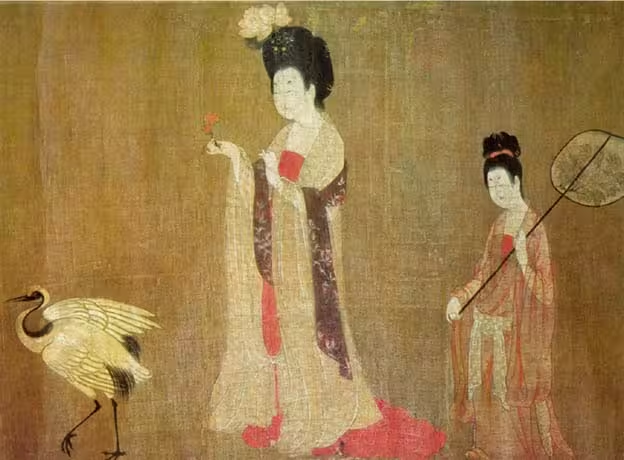
Tang painting, calligraphy and craft set the aesthetic grammar of East Asia. Court artists chronicled emperors and embassies, Wu …
The Tang soldier went to war on horseback, behind a laced-lamellar cuirass, with a composite bow on his back and a long saber at his …
Western Liang was a small dynastic state of the Sixteen Kingdoms period, founded in 400 by the Li family of Dunhuang and extinguished …
Woodblock printing — carving a page of text or image in relief on a wooden board, inking the raised surface and pressing it to paper — …
Xuanzang (602 – 5 February 664), born Chen Hui, was the Tang monk whose pilgrimage to India became the foundational journey of Chinese …
The Yangtze — Chang Jiang, the Long River — is China's greatest waterway: 6,300 kilometers from the Tibetan plateau to the East China …
The Yellow Sea is the marginal sea between the Chinese mainland and the Korean Peninsula, named for the golden-yellow silt poured into …
The Yuejueshu (越绝书, 'Lost Chronicles of Yue') is a history of the ancient southeastern state of Yue, compiled around the first century …
Yuwen Huaji (died 22 March 619) was a Sui dynasty general and court favorite who murdered his own emperor — strangling Emperor Yang of …
Zhang Jiuling (678 – 5 June 740), courtesy name Zishou, was a poet-statesman of the southern gentry who rose through the examinations …
Zhang Xuan (713–755) was the great painter of Tang court ladies — the visual chronicler of the palace world of Emperor Xuanzong's …
Zhou Fang (c. 730–800), courtesy name Zhonglang, was the painter who perfected the image of Tang beauty — the creator of the plump, …
Zhu Wen (852 – 18 July 912) — later Zhu Quanzhong, then Emperor Taizu of Later Liang — was the warlord who ended the Tang dynasty. A …