Li Yuanji
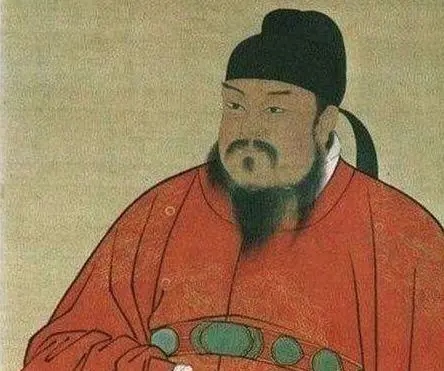
Li Yuanji (603 – 2 July 626), Prince of Qi, posthumously Prince La of Chao, was the fourth son of Emperor Gaozu and the imp of the founding generation — brilliant, violent, jealous, and dead at twenty-three beside his brother Li Jiancheng in the Xuanwu Gate ambush. In the histories written under his killer's reign, Yuanji is the instigator of every dark scheme against Li Shimin; what the record shows underneath is a gifted young prince whose hatred was real enough and whose usefulness to his elder brother made the crisis unsolvable without blood.
The Youngest Brother
Born in 603 to Li Yuan and Duchess Dou, Li Yuanji grew up in the household of a frontier aristocrat at Taiyuan and came of age as the family rose against the Sui. During the founding campaigns he was given independent commands — some successful, some not. His youth was marked by the cruelty that the histories dwell on: as a teenager he allegedly ordered his guards to duel with real weapons for sport, and as Prince of Qi in Luoyang he hunted with an extravagance and a body count of peasants’ crops and persons that brought repeated censure. Whether these stories grew in the telling after 626 is unknowable; the pattern they sketch — a violent, proud, unstable young man of great physical gifts — is consistent enough to be believed in outline.
Soldier and Schemer
Yuanji was not without ability. He campaigned alongside his brothers in the early wars, held major commands, and was famed for his skill with the lance — the histories concede him the best spear-work of the three brothers and extraordinary strength. His political role, however, was fixed early: he attached himself wholly to the crown prince Li Jiancheng. The two shared quarters and staff, and Yuanji became the faction’s sword — the brother who advocated the direct solution against Li Shimin when Jiancheng hesitated. The post-626 sources credit Yuanji with repeated proposals to assassinate the Prince of Qin, including a plan to kill him at Yuanji’s own residence under cover of a martial exhibition; they credit Jiancheng with refusing. Whether or not the specifics are true, the court’s understanding at the time ran the same way: the Qi prince was the heir’s enforcer, and the Qin prince’s household watched him accordingly.
Xuanwu Gate and Death
On 2 July 626, Yuanji rode with Jiancheng toward the palace for the audience that never happened. At Xuanwu Gate he was the quicker to react: warned by an attendant that something was wrong, he turned to flee, and in the flight he nearly reversed the coup — the Zizhi Tongjian preserves the extraordinary scene of Yuanji, a superb archer, drawing his bow three times against Li Shimin but unable, in his panic or by some accounts because the bowstring failed him, to loose effectively. Shimin’s horse bolted into the woods; Yuanji pursued, only to be intercepted and killed by Yuchi Jingde, the Qin prince’s ferocious champion, whose arrival with Yuanji’s severed head broke the gate defenders’ resistance. Yuanji’s five sons were executed with their cousins; his titles were posthumously degraded; and the histories of the new reign assigned him the permanent role of the wicked younger brother.
The Posthumous Verdict
Like Jiancheng’s, Yuanji’s memory was managed by his killer: the standard biography is a catalogue of cruelties, plots, and portents that read almost parodically as villainy. Also like Jiancheng, he received a partial rehabilitation in 642, when Taizong restored the brothers’ princely ranks and had them reburied — though Yuanji’s posthumous title, Prince La of Chao (“La” carrying connotations of harshness and perversity), shows the restoration’s limits. Historians have generally found him the least sympathetic of the three brothers — the cruelty stories likely have some base — while noting that a twenty-three-year-old whose political function was to embody his faction’s violence would, under the victors’ pens, inevitably become its monster.
Historical Assessment
Li Yuanji’s significance lies in what his career completes: the founding triangle of Gaozu’s sons, in which the eldest held the legitimacy, the second the merit, and the fourth the ferocity. That the ferocity died at the gate with the legitimacy, leaving the merit to rule, was the coup’s arithmetic. Yuanji is remembered, when he is remembered, as the cautionary brother — the proof that in the Tang founding, talent without judgment, and proximity to a throne without a claim to it, were the most dangerous possessions a prince could hold.
References & Historical Sources
- Old Book of Tang, annals of Gaozu and Taizong; biography of Prince La of Chao.
- New Book of Tang, biography of Prince La of Chao.
- Zizhi Tongjian, volume 191.