Li Jiancheng
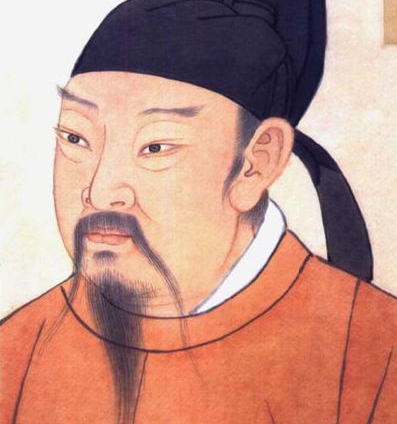
Li Jiancheng (589 – 2 July 626), posthumously Crown Prince Yin, was the eldest son of Emperor Gaozu and the first heir apparent of the Tang dynasty. Heir by primogeniture, trusted administrator of the capital region, and leader of the court's traditional faction, he lost everything on a single morning at Xuanwu Gate, killed by his brother Li Shimin in the coup that began Taizong's reign. His biography — written by the victors — remains the dynasty's most instructive case of how history is made by those who survive to write it.
The Dutiful Heir
As Li Yuan’s eldest son, Li Jiancheng stood second in the family council from the dynasty’s beginning. During the Taiyuan uprising of 617 he guarded the base; as the Tang armies took Chang’an, he helped secure the capital and was named crown prince in 618, aged twenty-nine. His record over the next eight years was respectable: he administered the capital region with competence, campaigned against the bandit leader Liu Heita in 622 and won, receiving surrendered rebels with a leniency the Old Book of Tang credits with stabilizing Hebei, and presided over the court’s regular government while his younger brother campaigned abroad. He drank and hunted with the court’s senior establishment — Pei Ji, Feng Deyi, the old Sui officials — and he was, by every account that predates 626, a normal and adequately gifted crown prince.
The Rival
The problem was Li Shimin. The Prince of Qin’s conquests — Xue Ju, Liu Wuzhou, Wang Shichong, Dou Jiande — had made him the dynasty’s military hero and the patron of its fiercest generals, while the officers’ loyalty followed the man, not the throne. By 624 the court had effectively two courts: the heir’s establishment of civil officials and the Qin prince’s military household, each provisioning itself with honors and followers, each reporting the other’s treasons to their father. Jiancheng’s ally was his younger brother Li Yuanji, Prince of Qi, whose hatred of Shimin was undisguised; their faction is accused by the post-626 sources of poisoning Shimin at a banquet and of several assassination plots. The truth of these accusations is unrecoverable — the records were reviewed by Taizong himself, in his unprecedented breach of the historian’s sanctuary — but the Old Book of Tang concedes that by 626 both sides were preparing for violence.
Xuanwu Gate
On the morning of 2 July 626, Jiancheng and Yuanji rode to an imperial audience at the palace. At Xuanwu Gate, the northern entrance where Shimin’s men had taken position during the night, the brothers were intercepted. In the received account, Shimin shot his elder brother dead with his own bow; Yuanji fled, was brought down, and killed. The fighting was brief — a few dozen men on each side — but its sequel was not: Shimin’s officers entered the palace, and within days Emperor Gaozu had named Shimin crown prince and within two months had abdicated. Jiancheng’s five sons were executed and excluded from the imperial clan; his adherents were purged; and the new reign’s historians set to work explaining why the dead man had deserved death.
The Posthumous Rewriting
What the victors did to Jiancheng’s memory became visible precisely because they overdid it. The official portrait of the depraved, incompetent, dissolute heir — lazy, lecherous, conspiring constantly — is contradicted by the pre-coup record any careful reader can still see in the same histories: a prince who governed the capital for eight years without scandal, who campaigned competently, whose death provoked genuine mourning among the Sui-old bureaucracy. In 642, sixteen years after the coup, Taizong himself partially relented, restoring Jiancheng’s rank of crown prince (with the posthumous name Yin, “the hidden”) and ordering him reburied with princely honors — an act contemporaries and later historians alike read as the aging emperor’s uneasy conscience. The epithet has been debated ever since: yin as “concealed” (his merit concealed by his brother’s triumph) or as “withdrawn” (the heir who stepped aside into death).
Historical Assessment
Modern scholarship reads Li Jiancheng’s fate as structural, not personal. The early Tang’s founding bargain — primogenitude at court, merit in the field — contained a contradiction that three centuries of palace history would keep reenacting, and the dynasty’s greatest emperor began his reign by resolving it with an arrow. The fair verdict on the man himself is the one his brother’s own rehabilitation gesture implies: a capable heir destroyed by a system that gave his rival an army and then punished him for having one.
References & Historical Sources
- Old Book of Tang, annals of Gaozu and Taizong; biography of Crown Prince Yin.
- New Book of Tang, biography of Crown Prince Yin.
- Zizhi Tongjian, volume 191.
- Howard J. Wechsler, “The Founding of the T’ang Dynasty” (Cambridge History of China, vol. 3).