Hou Junji
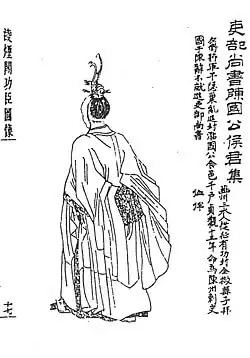
Hou Junji (died April 29, 643) was a general of the early Tang who rose with the dynasty, conquered Gaochang and campaigned against the Tuyuhun, sat at the chancellorship table as one of Emperor Taizong's most trusted men — and died on the execution ground for his part in a prince's conspiracy. His career is a compressed parable of the early Tang: the opportunities it offered soldiers of talent, and the fragility of favor at a court where princes plotted and brothers had killed brothers.
Rise with the Founding
Hou Junji came to prominence under Li Shimin, the future Emperor Taizong, during the wars of unification, serving as a staff officer in the campaigns that destroyed rival regimes. He distinguished himself in the 621 Battle of Hulao against Dou Jiande and Wang Shichong, and in the subsequent elimination of Liu Heita. When the Xuanwu Gate crisis of 626 broke, Hou was among the small circle of officers — with Yuchi Jingde, Qin Shubao, and the rest of the Prince of Qin’s household guard — who planned and executed the coup that made Li Shimin emperor. The Old Book of Tang records his presence at the ambush itself; his reward was rank, wealth, and a place at the summit of the new government.
The Western Conquests
Hou’s title to fame is military. In 635 he served under Li Jing in the campaign against the Tuyuhun of the Qinghai plateau, a grinding high-altitude war in which the Tang army pursued the Tuyuhun khan deep into the Koko Nor region and forced his submission. Two years later, in 640, Taizong gave him independent command of the expedition against Gaochang, the oasis kingdom at Turfan controlling the northern route of the Silk Road. Hou crossed the desert, invested the Gaochang capital, and accepted the surrender of its king Qu Wentai’s son without a prolonged siege — the most westerly conquest of Taizong’s reign, and the act that brought the Tang garrison system directly onto the Silk Road. For this he was made a Duke and entered the chancellorship circle.
Envy, Grievance, and the Plot
Success turned sour in him. Passed over for what he considered his due in the distribution of honors after the Tuyuhun campaign — a dispute in which he openly accused colleagues of stealing his merit — Hou grew embittered. He attached himself to the crown prince Li Chengqian, Taizong’s eldest son and a young man increasingly estranged from his father. In 643, with the prince’s position collapsing under his own misconduct, the Chengqian faction plotted to force the issue: some accounts have them planning to assassinate the rival prince Li Tai and seize the palace, others a wider coup. The plot leaked; Chengqian was deposed and confined, and the investigators followed the trail to Hou Junji.
Execution
Taizong’s grief at the discovery was personal — Hou had been his man since the beginning, one of the coup-makers of 626. The emperor is said to have told his ministers that he could not bear to send Hou to the executioner, and only when the censors insisted that the law admitted no exception did he sign the order. Hou was executed on April 29, 643, alongside the other principals of the plot, and his family was enrolled among the enslaved — a sentence Taizong partially remitted out of respect for the dead man’s services. The case hardened the emperor’s already grim view of palace conspiracies; within months, the deposed Chengqian himself was dead in exile.
Historical Assessment
Hou Junji’s biography in the Old Book of Tang is a study in the arithmetic of favor: talent and loyalty earned at the founding did not compound forever, and the grievances of a slighted general made him, in the end, the most dangerous kind of courtier — a conspirator with friends in the army. Later historians have read his fall less as a tragedy than as a symptom: a dynasty founded by a palace coup could never quite stop fearing the next one.
References & Historical Sources
- Old Book of Tang, annals of Taizong; biography of Hou Junji.
- New Book of Tang, biography of Hou Junji.
- Zizhi Tongjian, volumes 194–197.