Guo Ziyi
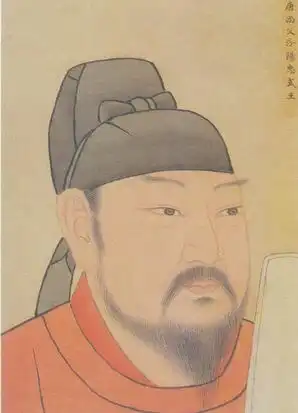
Guo Ziyi (697 – 9 July 781), posthumously Prince Zhongwu of Fenyang, was the general who saved the Tang dynasty — and the rarest figure in its history, a supreme commander who repeatedly refused to become its master. From the darkest days of the An Lushan rebellion, when he organized the resistance and recovered the two capitals, through decades of frontier war against the Uyghurs and Tibetans, Guo Ziyi held more of the empire's military power than any subject since the founding, and died at eighty-four in his bed, honored beyond precedent. Later ages deified him as the God of Wealth; his own age called him simply the bulwark of the state.
The Officer Nobody Noticed
Guo Ziyi was fifty-eight when history found him, and nothing in the previous four decades had suggested he was anything but a sound, unremarkable frontier officer: a jinshi examination pass by the military route, long service on the western frontier garrisons under the Anxi and Shuofang commands, a reputation for fairness toward his men and caution in counsel. When An Lushan rebelled in December 755, the court flung its best-known names at the rebellion and lost them — Gao Xianzhi and Feng Changqing executed, Geshu Han destroyed at Tong Pass — while Guo, commanding the Shuofang army on the northern frontier, was the general who simply kept fighting: blocking the rebels’ northern flank, taking their home base at Fanyang, and holding the line through the disastrous summer of 756 when both capitals fell and the new emperor Suzong was a refugee at Lingzhou. It was Guo Ziyi who marched to Lingzhou and put his army at Suzong’s disposal. Without that army, historians agree, there would have been no Tang restoration at all.
Recovering the Empire
His campaigns of 757 defined the war. In alliance with the Uyghur cavalry — whose arrival he negotiated, accepting the sack of the recovered capitals as the price, a decision he defended to his death as the arithmetic of survival — Guo Ziyi’s armies stormed Chang’an in September and Luoyang in October 757, driving An Lushan’s successor from the field and restoring the dynasty in the eyes of the world. The court loaded him with honors — Duke of Dai, chancellor’s rank, command of all the field armies — and then, in the dynastic reflex he would face for the rest of his life, grew afraid of him. He was repeatedly relieved, recalled, reassigned, and exiled to sinecures; and repeatedly, when the Tibetans took Chang’an in 763, when the Uyghurs turned mercenary, when the generals fell out, the court recalled the one man it never fully trusted and never dared discard. He held the northwest for twenty years on prestige alone — the Old Book of Tang records that Uyghur khans received him as an equal and Tibetan commanders withdrew at news of his approach — and died in July 781, aged eighty-four, still in command, the longest-serving general of the dynasty.
The Art of Survival
Guo’s political survival was as masterful as his generalship, and it was deliberate. Offered every opportunity the age gave its strongmen — mutinous officers urging him to set up his own regime, an emperor’s sons who might have backed him, a court too weak to stop him — he declined each time, in terms that became his epitaph: that a subject’s greatest fortune is to serve, and that he would rather be wronged by the throne than wrong it. When jealous officials forged letters to frame him, he presented them to the emperor himself. When his son, in a famous quarrel, beat a princess of the imperial household, Guo bound the boy and brought him to court for judgment — and the emperor, in the anecdote that sealed Guo’s legend, replied that he would not interfere between a father and son: “You may discipline him as you see fit.” The joke carried the whole structure of the late-Tang settlement: the throne needed Guo more than Guo needed the throne, and both men knew it, and both pretended otherwise, and the empire survived on the strength of the pretense.
Historical Assessment
The official histories, compiled in the dynasty Guo saved, could not praise him enough, and the popular religion of later centuries carried the praise further: Guo Ziyi became the Lu Star of the Fu Lu Shou triad, the God of Wealth and Happiness, his image hung in shops for a thousand years — a fate shared by no other Tang general, and by few soldiers in any tradition. Modern historians read him as the indispensable man of the dynasty’s second half: without his armies in 757, no Tang restoration; without his prestige in 763, no Tang at all. The empire he preserved repaid him with suspicion, and he repaid the suspicion with loyalty, to the end — the one transaction of the late Tang that everyone, including the throne, understood as priceless.
References & Historical Sources
- Old Book of Tang, biography of Guo Ziyi.
- New Book of Tang, biography of Guo Ziyi.
- Zizhi Tongjian, volumes 218–226, 237.
- Denis Twitchett, Cambridge History of China, vol. 3, on the restoration campaigns.