Generals & Rebels
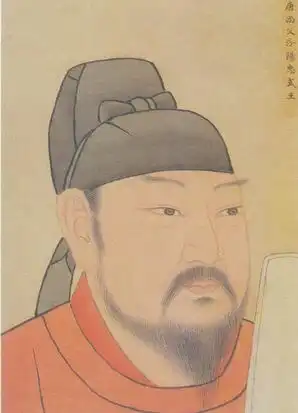
The Tang empire was won by generals, saved by generals, and finally destroyed by the soldiers it could not demobilize. This page surveys the dynasty's military men — the conquerors of the Turks and the oasis cities, the saviors of two capitals, and the rebels whose names became the names of catastrophes. From Li Jing's textbook campaigns to An Lushan's annihilating treason and Huang Chao's sack of Chang'an, the story of Tang arms is the story of the dynasty itself.
The Military System
The Tang army of the golden age was built on the fubing — hereditary soldier-farmers of northern and western Chinese stock, organized in garrison units that trained in the agricultural off-season and answered the throne’s summons for seasonal campaigns. Under this system, the early Tang conquered at astonishing speed: the Eastern Turks destroyed in a single campaign of 630, the Tuyuhun subdued, the oasis cities of the Tarim Basin garrisoned, Korea invaded, the western regions carried to the Talas River. Command went to professional soldiers of every origin — Chinese, Turkic, Korean, Sogdian — under the principle that merit, not birth, won armies. The system decayed after the mid-century: long frontier wars rotted the fubing, and from the 660s the frontier was entrusted to permanent area commands under military governors (jiedushi) with standing professional armies. It was a jiedushi’s army that rebelled in 755, and jiedushi armies that fought the next century and a half of civil wars.
The Conquerors
Two early generals define the golden age of Tang arms. Li Jing — soldier, strategist, and military writer — annihilated the Eastern Turkic Khaganate in 630 with a winter strike on the Orkhon and the capture of Jieli Khan, ending two centuries of steppe menace at a stroke, and his later campaigns subjugated the Tuyuhun and planned the assaults on Goguryeo; his Art of War commentaries became Chinese military classics. Gao Xianzhi, a general of Goguryeo descent, carried Tang arms over the Pamirs to the Talas River in 747–751 — the farthest west Chinese power has ever reached — before the defeat at Talas in 751 and, more damningly, his execution at Tong Pass in 756 on a eunuch’s accusation became symbols of the throne’s growing lethal caprice toward its own best soldiers. Jia Dan, soldier and cartographer, mapped the western world for the late-eighth-century court and his gazetteers fixed the geography of the Silk Road for posterity.
The Saviors
When catastrophe came, it was generals who answered. Guo Ziyi is the dynasty’s military saint: recalled from disgrace in 755, he organized the armies that recaptured the two capitals in 757, fought the Uyghurs and Tibetans for decades, and repeatedly refused every opportunity the throne gave him to become the dynasty’s next usurper — dying in 781, aged eighty-four, the most honored subject in the empire. Pugu Huai’en, another steppe-origin general, saved the dynasty with Uyghur cavalry and then, persecuted by court suspicion, died rebelling against the throne he had rescued — the era’s most pointed parable of how the Tang treated its saviors. And the Shatuo Turk Li Keyong, riding to the dynasty’s relief against Huang Chao in 883, fought loyally for a court that never once trusted him.
The Destroyers
Against them stand the three great rebels. An Lushan, the Sogdian-Turkic frontier favorite, destroyed the High Tang in eight years of war that began in 755 and consumed, directly or indirectly, the dynasty’s confidence, its fiscal system, and much of its population — the single most destructive event between the Han and the Mongol conquests. His childhood friend and fellow general Shi Siming continued the war after An’s murder, protracting the catastrophe to 763. And Huang Chao, the failed examination candidate and salt smuggler, a generation later did what An Lushan never quite managed: he took both capitals, drove the emperor to Sichuan, and held the imperial palace for years — the rebellion that broke the dynasty’s back and delivered its remains to the warlord Zhu Wen, who ended it in 907. Between Dou Jiande’s honorable agrarian state in Hebei and Zhu Wen’s palace murders lies the full spectrum of what Tang rebels could be — and the dynasty’s own generals, in the end, were usually the difference between the two.
References & Historical Sources
- Old Book of Tang and New Book of Tang, biographies of Li Jing, Gao Xianzhi, Guo Ziyi, Pugu Huai’en, and An Lushan.
- Zizhi Tongjian, passim.
- Denis Grafflin, “Reinventing China” (1989), on the late Tang military governors.
- Edward A. Dreyer, “Military Continuities” (in The Cambridge History of China, vol. 3).