Personal Name:
Li Xuan 李儇
Reign: 873 - 888 (Qianfu, Guangming, Zhonghe, Guangqi, Wende)
Xizong 僖宗
Temple name
Emperor Huisheng 惠圣皇帝
Posthumous name
The Legacy
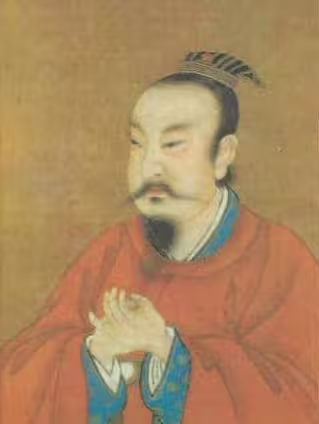
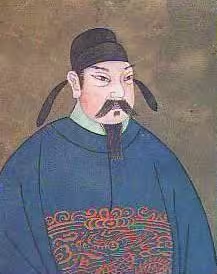
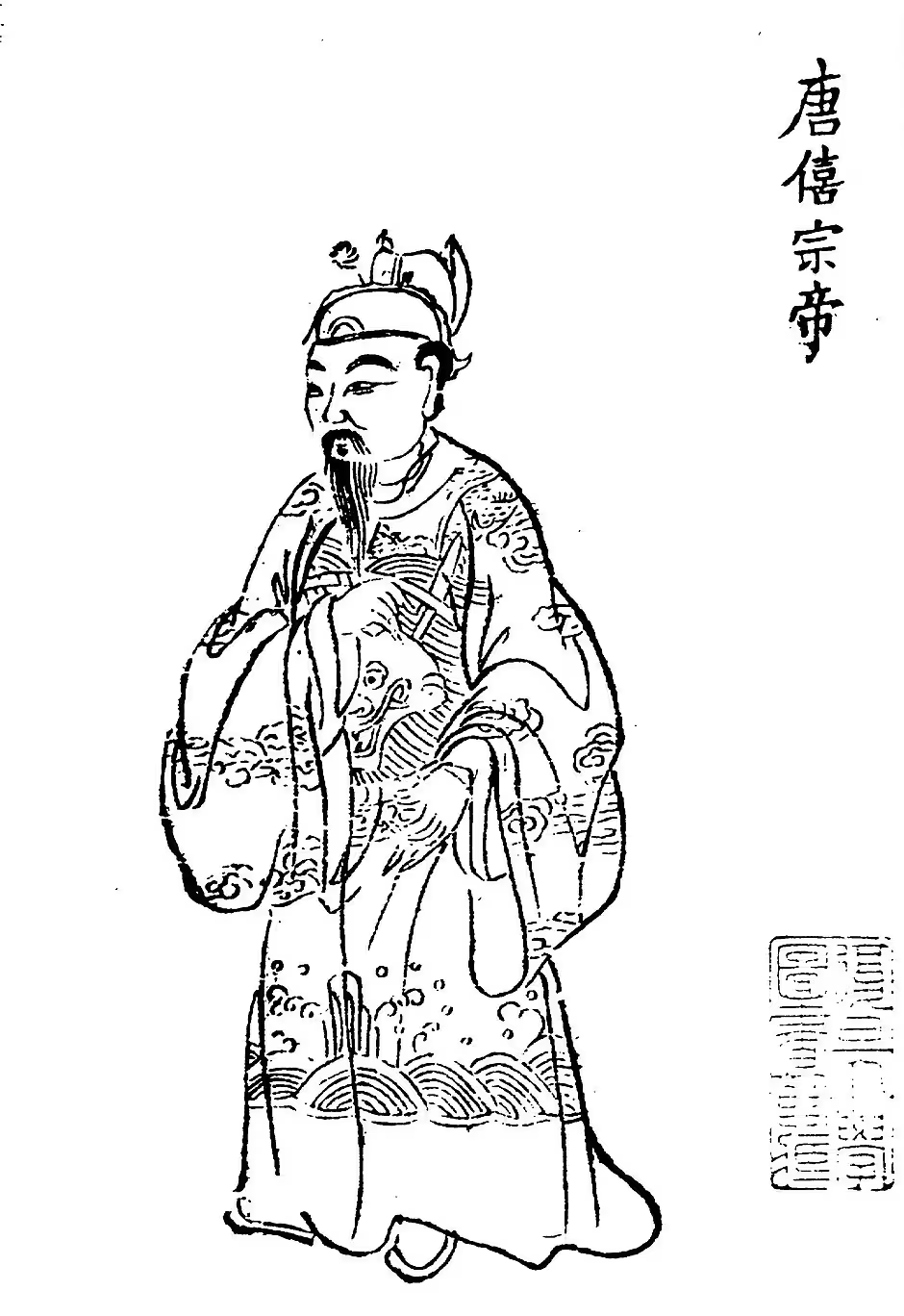
Emperor Xizong of Tang (8 June 862 – 20 April 888), personal name Li Xuan, born Li Yan, was the eighteenth emperor of the Tang dynasty — crowned at twelve on his father’s death, reared by the eunuch he called “Father,” and remembered as the sovereign under whom the empire of the Yellow River finally broke. His fifteen years were dominated by a single event, the rebellion of Huang Chao (875–884), the largest insurrection in Chinese history to that date, which held both capitals, declared a rival dynasty, and left the heartland so depopulated and so stripped of institutions that the Tang of 885 was a government in name and a constellation of warlords in fact.
The historians do not blame the boy, exactly. The Zizhi Tongjian treats him as what he was: an amiable, gifted, utterly unformed child placed at the apex of an exhausted state, whose natural gifts — for polo, for music, for charming a room — had been trained for fifteen years by the one man who had no interest in training him for the throne.
Reign & Achievements
The child and the eunuch. The eunuch Tian Lingzi — appointed the boy’s guardian by the dying Yizong — ran the empire through the Shence Armies and through the boy’s affection, answering to “Father” and treating the court as household. That the dynasty functioned at all in the Qianfu years owed something to the bureaucratic memory of men like Chancellor Zheng Tian, who held the western front together with improvised armies through the darkest year.
The resistance at the capital (880–883). When Huang Chao’s host, swollen by years of marching from the Yangzi to the far south and back, crossed the river in the winter of 880 and took Tong Pass, the court fled to Chengdu — and the resistance that mattered began: Zheng Tian rallied the remaining garrisons; the Shatuo chieftain Li Keyong, summoned from the northern frontier, brought the one cavalry force in the empire still capable of standing in the open field; and in the spring of 883 the combined armies stormed Chang’an. Huang Chao fled east and died at Wolf-Tiger Gorge the following year, his great kingdom reduced to a memory and a mass grave. The Tang had survived its mortal wound — barely, expensively, and with the surgeons now owning the hospital.
The last diplomacy. In 877 the court made peace with Nanzhao, ending the southern wars; in the west, the Tibetan menace had dissolved. On paper, the empire of 885 looked smaller but saner. In fact the provincial armies that had saved it — Li Keyong in the north, Zhu Wen at Bianzhou in the east, the armies of the Guanzhong garrisons — were now the state.
controversies & Failures
The reign of flight. Xizong’s was the first reign of the dynasty’s later centuries to lose the capital twice: first to Huang Chao in 881, and again in December 885, when Tian Lingzi’s confiscation of the Anyi salt ponds provoked the governor Wang Chongrong and his ally Li Keyong into war against the palace, the Shence armies lost Chang’an in a day, and the emperor fled west to Fengxiang and then to Hanzhong. The usurper Zhu Mei briefly enthroned a puppet prince in the abandoned capital; the puppet was killed, Zhu Mei murdered by his own officer, and the warlords settled into their own peace, with the throne as its least consulted party.
The banquet of the provinces. With the court at Chengdu for four years and at war with itself for three more, the appointment of military governors became a negotiation among armed men, and the tax base shrank to the southwest and the lower Yangzi. The register of 885, as the historians never tire of noting, recorded a fraction of the households of 754 — and those largely in provinces the court no longer governed.
The Defining Trait: The Boy Who Left the Map
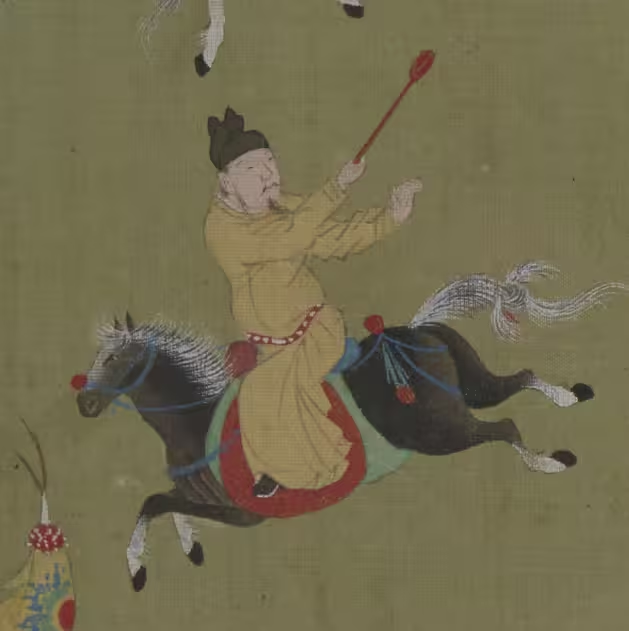
Xizong’s defining trait was lightness in a heavy age: he was, by every account, charming, quick and brave at games, the best polo player in the palace — and he governed exactly as much as he wished to, which was not at all. The empire that needed a Dezong got a jouster; it got the jouster it deserved, the historians imply, for entrusting a drowning state to a child and his keeper.
Anecdotes & Folklore
- “I would take first place at polo.” The emperor’s celebrated boast to his companions — that if the empire held examinations in mounted polo, he would rank first — drew from the court jester Shi Yexu the most quoted riposte of the age: “And if Yao and Shun were the examiners, Your Majesty would surely be failed.” The emperor laughed, the Tongjian records, and the exchange passed into the canon of what the court could still permit itself to say.
- The chrysanthemum poem. Huang Chao’s attributed verses — “When autumn comes, the eighth day of the ninth month, my blossoms open after all flowers have died; the fragrance strikes the sky over Chang’an, the whole city in golden armor” — are preserved in later anthologies and may be legend stitched onto a failed examination candidate. They fitted him so perfectly that China has never bothered to doubt them.
- The night at Shangyuan Post (884). After Huang Chao’s fall, Li Keyong’s victorious Shatuo army camped at Bianzhou, guest of the warlord Zhu Wen, who feted the northerners and then, in the small hours, sent men to burn the hostel. Li Keyong fought his way out through the flames with a handful of riders; from that night dated the thirty-year war between his house and Zhu Wen’s — the private feud that, a generation later, would close the dynasty. The Tongjian gives the whole episode in a page and a half; it is the hinge of late Tang history.
- Return and death (888). When the emperor finally re-entered his rebuilt capital in the spring of 888, the chroniclers record the crowds and the tears — and, in the same entries, the emperor’s worsening illness. He died at twenty-five within weeks of coming home, leaving the throne to a brother who would fight for it harder than any emperor since Dezong, and lose.
References & Historical Sources
- Jiu Tang Shu (旧唐书), juan 19 (Annals of Xizong).
- Xin Tang Shu (新唐书), juan 9.
- Zizhi Tongjian (资治通鉴), juan 252–257 (Qianfu 1 through Wende 1).
- Cefu Yuangui (册府元龟), relevant juan — the Huang Chao campaigns and the peace with Nanzhao.
- Cambridge History of China, vol. 3, ch. on the late ninth century.
- 岑仲勉 (Cen Zhongmian), 隋唐史 — on the rebellion’s course and the warlord settlement.
- Robert M. Somers, “The End of the T’ang,” in Cambridge History of China, vol. 3.