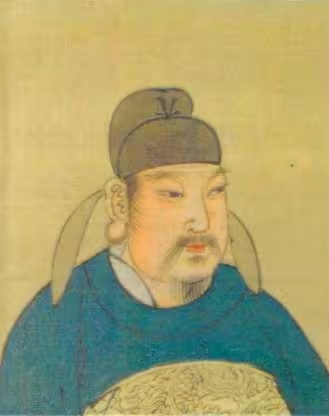
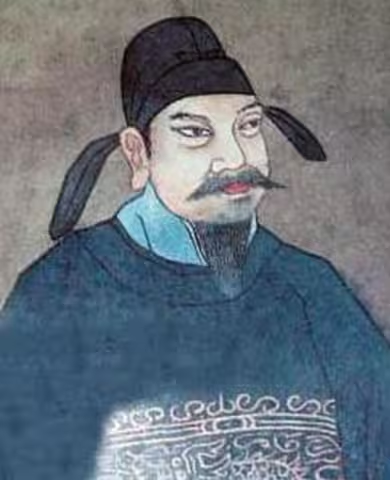
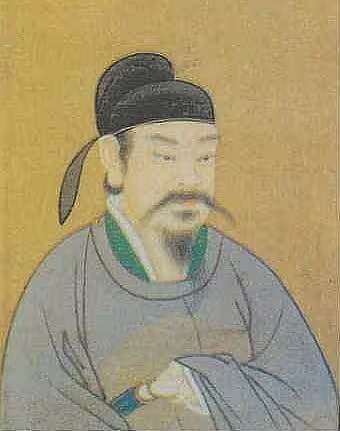
Personal Name:
Li Chun 李纯
Reign: 805 - 820 (Yuanhe)
Xianzong 宪宗
Temple name
Emperor Zhaowen 昭文皇帝
Posthumous name
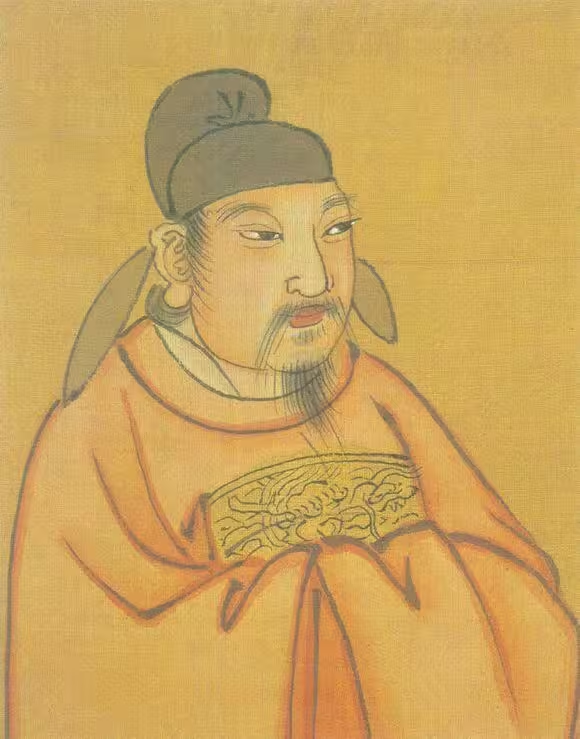
The Legacy
Emperor Xianzong of Tang (17 March 778 – 14 February 820), personal name Li Chun, was the eleventh emperor of the Tang dynasty and, in the conventional periodization, the dynasty’s second founder. His fourteen-year Yuanhe reign achieved what Dezong’s wars and two generations of conciliation could not: the military governors of the northeast — autonomous, hereditary and tribute-free for fifty years — were beaten, one after another, back under the fiscal and appointive authority of the court. The age is called the Yuanhe Restoration (元和中兴), and the Zizhi Tongjian marks its close with a sentence of undisguised triumph: some thirty provinces that had appointed their own officers and paid no taxes “now all obeyed the court’s constraints.”
He was also the last strong emperor of the Tang — a fact that lends his murder in 820 its awful weight. When he died, suddenly, at forty-one, in a palace he had made orderly, the door he had forced shut on the eunuchs and warlords swung back open, and it never latched again.
Reign & Achievements
The reversal of the settlement. Xianzong came to the throne in August 805 at twenty-seven, placed there by the eunuchs who had overthrown his father’s reformers — and immediately governed as if the debt did not exist. His early chancellors Du Huangshang, Wu Yuanheng, Pei Du and Li Jiang persuaded him of the one heresy no emperor had dared act on since 763: that the jiedushi were mortal after all. The policy’s first test came within months: when the western warlord Liu Pi defied a routine transfer in 806, Xianzong ordered a campaign — his courtiers advised waiting for famine, the eunuchs advised compromise — and Gao Chongfang smashed Liu’s army in eight months, bringing the rebel to Chang’an for execution. In 807 the pattern repeated at Zhenhai. Two demonstrations, and the empire understood the dynasty had teeth again.
The Huai-Xi campaign (814–817). The supreme test was the hardest target: Huai-Xi (Zhangyi), whose warlord Wu Yuanji had defied the throne for a decade in the very breadbasket between the two capitals. The war consumed three years, two campaigns and one assassination — Chancellor Wu Yuanheng was murdered at dawn in the streets of Chang’an by agents of the rebel’s allies in 815, and his successor Pei Du took an axe-cut to the head from the same killers and survived, vowing war to the end. The decision fell in the winter of 817, when the young general Li Su — grandson of the great Li Sheng — staged the most celebrated raid in Tang history: in a night of snow, with a picked force and a captured enemy officer, Li Su crossed the line and took Cai Prefecture itself while the garrison slept, capturing Wu Yuanji in his bed. The capital, which had despaired of the war, erupted; the emperor declared a general amnesty except for the ringleader. Within a year the Prince of Chengde surrendered his kingdom and the last great holdout of Ziqing — its warlord Li Shidao murdered by his own subordinate in 818 — was dismantled and divided. Fifty years of Hebei autonomy ended on Yuanhe’s watch.
Government and letters. The restoration was administrative as much as military: the registers were rebuilt, the salt revenues flowed, the canal ran, and the court’s examiners once again mattered more than its generals. The Yuanhe court was also a literary court — Han Yu, the age’s greatest prose writer, served in its censorate; Bai Juyi drafted its edicts until his candor exiled him to Jiangzhou; Li Jifu produced the Yuanhe Junxian Tuzhi (元和郡县图志), the first systematic geography in Chinese history and the model for all successors. The emperor himself was a collector of poetry who could quote his officials’ couplets back at them.
The frontiers held. With the interior at peace, the western command functioned: Tibetan pressure eased through the decade’s diplomacy and border war, and in 821 the court would inherit the credit for a lasting peace on the plateau negotiated at the end of the reign.
controversies & Failures
The elixir and the end. The last years of the reign darken visibly. Xianzong, aging at forty, grew secretive and violent; he took to alchemical elixirs prescribed by Daoist adepts, and the historian Sima Guang — after laying out the symptoms of mercury poisoning in all but name — records that his temper became homicidal. On the morning of 14 February 820 he was found dead at the Zhonghe Hall. The official histories write “died suddenly” and stop; the Zizhi Tongjian, collating the palace gossip of a generation, concludes that the eunuch Chen Hongzhi, with the connivance of the Shence command, murdered him — and that the throne’s new occupant, his son Li Heng, was chosen by the same eunuchs over the late emperor’s own preference. Within days the eunuch leaders killed the eunuch dictator Tuqi Chengcui and the rival prince Li Yun. Whether the new emperor knew in advance is one of the dynasty’s permanently open files.
The Buddhism affair (819). When the Finger-Bone Relic of the Buddha was brought from Famen Temple to Chang’an amid mass hysteria, Han Yu submitted the most famous memorial of the age — the Memorial on the Buddha Bone — denouncing imperial patronage of a foreign faith and daring the Buddha to visit any calamity upon himself alone. Xianzong, enraged, nearly executed him; he was banished to the malarial south instead, where he argued crocodiles into good behavior and wrote the poems that secured his immortality. Posterity has judged the exchange a draw: the relic returned to its pagoda, Han Yu to the canon.
The never-crowned consort. Xianzong conspicuously never made his chief consort Guo — granddaughter of Guo Ziyi, of the greatest aristocratic house in the empire — his empress, in defiance of every protocol. Courtiers read the snub as fear of her family; she would outlive him by thirty years and preside as dowager over five reigns.
The Defining Trait: The Restorer’s Will
Xianzong’s defining trait was the will to bear the cost of victory. Every adviser — including most of his own cabinet — counseled the cheap patience of his father and grandfather; he chose the expensive war, accepted the assassination of his chancellors as the price of policy, and stayed the course to Cai Prefecture. The dynasty had produced greater emperors; after 763, it produced none more decisive.
Anecdotes & Folklore
- Snowfall on Cai Prefecture (817). Li Su’s night assault has been retold for twelve centuries: the guides were geese startled from the marshes to mask the column’s noise — or so the tale insists — the gates opened by a captured gate-captain, and the warlord taken while his army froze in the outposts. When Pei Du entered the city, he countermanded the planned sack: “The court wages war on one man.” The captured Wu Yuanji was sent to Chang’an in a cage cart; the emperor received the news playing chess, wept, and promoted everyone.
- “If the Buddha has power, let it fall on me.” Han Yu’s Buddha Bone memorial survives entire, including its dare: the court may burn the relic publicly, “and if the Buddha truly has spirit and can work calamity, let every misfortune fall upon my body.” The emperor’s first impulse was execution; the court talked him down to exile. Han Yu rode south composedly, writing to his nephew en route the poem that begins: “A memorial to the morning court, by evening exile eight thousand li.”
- The general’s hostage. Li Su’s indispensable guide into Cai was Li You, a captured enemy commander whom every subordinate begged him to execute. Li Su instead shared his own tent, untied him, and asked the plan of the city he had betrayed. Li You’s intelligence made the raid; Xianzong’s court, on learning the details, nearly court-martialed both for consorting with the enemy. The raid succeeded before the paperwork did.
- The chess game at the end. Tradition holds that Xianzong, warned by his Daoists that his elixir required “stillness,” kept to his chambers in his final months and would see no one; the rumor that his eunuchs were feeding him arsenic in honeyed pills ran through both capitals for twenty years before Sima Guang wrote it down as the likeliest truth.
References & Historical Sources
- Jiu Tang Shu (旧唐书), juan 14–15 (Annals of Xianzong).
- Xin Tang Shu (新唐书), juan 7.
- Zizhi Tongjian (资治通鉴), juan 237–241 (the Yuanhe campaigns and the assassination of 820).
- Han Yu, Memorial on the Buddha Relic (论佛骨表) — the primary text of the 819 crisis.
- Cambridge History of China, vol. 3, ch. on the ninth century.
- Charles Hartman, Han Yü and the T’ang Search for Unity — on the Yuanhe political-intellectual world.
- 岑仲勉 (Cen Zhongmian), 隋唐史 — the standard narrative of the Huai-Xi campaign.