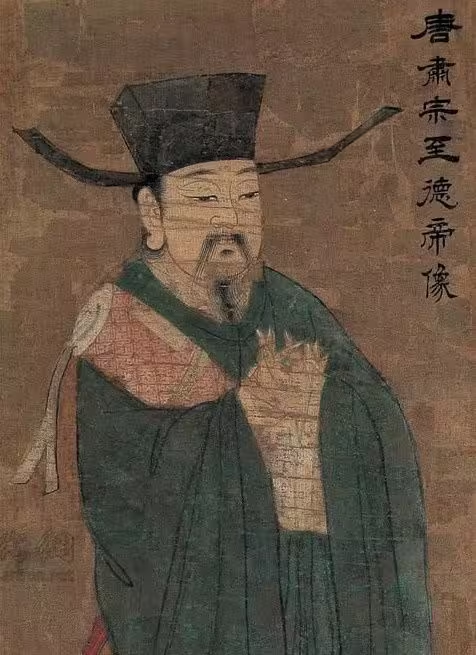
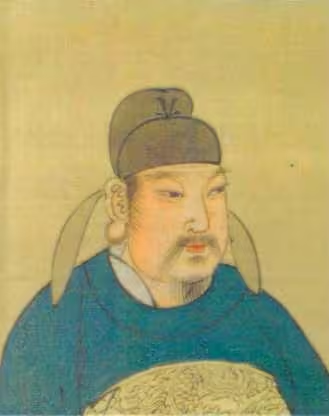
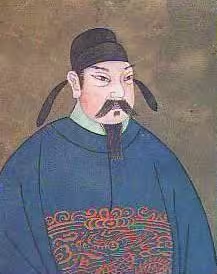
Personal Name:
Li Ang 李昂
Reign: 827 - 840 (Dahe, Kaicheng)
Wenzong 文宗
Temple name
Emperor Yuansheng 元圣皇帝
Posthumous name
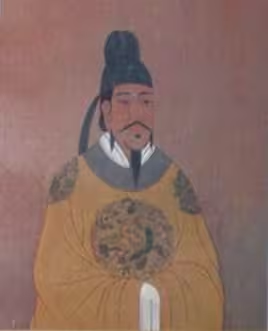
The Legacy
Emperor Wenzong of Tang (20 November 809 – 10 January 840), personal name Li Ang, born Li Han, was the fourteenth emperor of the Tang dynasty and, in the unanimous judgment of the historians, its most tragic. The Jiu Tang Shu delivered the verdict that has stuck for a thousand years: a ruler who had “the way of an emperor but not the talent of one” — personally frugal, studious and humane, and the prisoner, from the day the eunuchs chose him after his brother’s murder to the day they overrode his dying testament, of the very men who made him.
His thirteen years divide at the Sweet Dew Incident (甘露之变) of 835 — the boldest and most catastrophic attempt of the century to break the eunuch command of the armies, which ended with three chancellors tortured into false confessions, a thousand officials dead in the streets, and the institution of the emperorship itself reduced, visibly and permanently, to the eunuchs’ ward. After 835 Wenzong reigned as a ceremonial sovereign under surveillance; when he compared himself to the puppet kings of old, his own historians did not contradict him.
Reign & Achievements
The honest beginning. Wenzong began, like every hopeful ruler of the age, with the right appointments: the scholar-chancellors of the Dahe opening years — among them Niu Sengru, Li Zongmin, and in 833 the formidable Li Deyu — were the same men whose factional war would cripple the court, but individually they were able, and for six years the machinery of government ran with reasonable decency. The emperor’s personal conduct set the tone: he dismissed surplus palace women, cut his own household budget, refused jade tribute, and read — he was genuinely bookish, a connoisseur of poetry who kept the examination lists under his own scrutiny.
The stone classics (837). The reign’s most durable monument is cultural: the Kaicheng Stone Classics, the twelve Confucian classics engraved in standard script on 114 stone tablets at the Directorate of Education — the authoritative texts of the empire, set in stone after generations of copyists’ corruptions. They still stand in Xi’an. For a sovereign remembered as a failure of power, they are an oddly permanent signature.
The Liu Fen examination (828). When the examination candidate Liu Fen submitted an anti-eunuch philippic of unprecedented violence — naming the problem, its history and its remedy with the subtlety of a cudgel — the examiners, awed and terrified, failed him rather than pass him into eunuch view. The scandal of the rejected memorial became more famous than any pass; “the realm grieved for Liu Fen” entered the language as shorthand for talent destroyed by fear. The emperor, who could not protect a candidate, at least could not stop the story.
controversies & Failures
The Sweet Dew Incident (835). The emperor’s counter-coup, planned with his new favorites Li Xun and Zheng Zhu, was to be his liberation: announce that sweet dew — the supreme celestial omen — had appeared on the pomegranate trees of the Left Guard compound, summon the eunuch commanders to view the miracle, and kill them among the branches. On 21 November 835 the party set out as scripted; then a gust lifted the curtain on the hidden soldiers before the trap closed, and the eunuch Qiu Shiliang bolted with the emperor himself as hostage back into the palace. The Shence Armies answered by declaring the court in revolt. Chancellor Wang Ya, seventy years old, was tortured into confessing a conspiracy he had not led and executed with his colleagues Jia Su and Shu Yuanyu; Li Xun was cut down fleeing; Zheng Zhu was lured back from his frontier command and killed; the official dead, by the Tongjian’s estimate, ran near a thousand, and the grieving families were forbidden to mourn. “At court and in the lanes,” Sima Guang writes, “the corpses of the hat and girdle class lay scattered.” The emperor survived as his captors’ legitimacy; government thereafter ran through two institutions — the eunuch secretariats and the Shence command — with the throne as figurehead. Wenzong never again attempted anything.
The succession he could not control. His eldest son and crown prince, Li Yong, died in 838 amid dark rumors involving a favorite consort; the emperor’s chosen successor, the young Prince of Chen Li Chengmei, was installed in 839 — and when Wenzong lay dying a year later, the eunuchs Qiu Shiliang and Yu Hongzhi simply produced a different prince, enthroned him as Wuzong, and had Li Chengmei killed. The dying emperor’s last known order was disobeyed within hours, at his bedside.
The Defining Trait: The Scholar Behind Glass
Wenzong’s defining trait was helpless lucidity. He saw the disease with perfect clarity — he told his scholar Zhou Chi that he was worse than the puppet kings of antiquity, who at least had been ruled by great lords, “while I am ruled by my own household slaves” — and he could do nothing, and he knew it, and the knowing was the punishment. Of all the Tang emperors, he is the one posterity pities.
Anecdotes & Folklore
- “Worse than Nan and Xian.” To Zhou Chi, one of the few officials he could still talk to, Wenzong made the comparison that named his cage: “King Nan and Duke Xian were controlled by powerful lords. I am controlled by my own household slaves. Measured so, I am not even their equal.” Then, the Tongjian adds, he wept — and Zhou Chi wept, and the interview was ended by the eunuchs outside the door.
- The blood remonstrance (829). At the very start of the reign, the junior censor Liu Qichu knelt at audience and beat his forehead on the floor until it bled, denouncing the late court’s hunting parties and demanding the young emperor swear off his brother’s diversions. The scene so moved the court that it was retold as the inauguration of Dahe rectitude; Jingzong’s killers, at least, had installed a conscience.
- The chancellor who kept his head down. After 835, the able Li Shi served as chancellor while riding out two assassination attempts, including one in the streets of the capital that left him wounded — evidence, everyone understood, that the eunuchs suspected even their own creature’s creature. He survived by being boring: “better a dull chancellor than a dead honest one” was the governing maxim of the Kaicheng years, and Wenzong, watching from behind glass, could not disagree.
- The rejected censor’s curse. Liu Fen, failed and exiled to a minor post, died obscure; but his memorial circulated in copies for the rest of the dynasty, and when the eunuchs finally fell, forty years later, it was read aloud at court as prophecy. The examiners who had failed him were remembered as the men who flinched.
References & Historical Sources
- Jiu Tang Shu (旧唐书), juan 17 (Annals of Wenzong).
- Xin Tang Shu (新唐书), juan 8.
- Zizhi Tongjian (资治通鉴), juan 243–246 (the Dahe years, the Sweet Dew Incident, the Kaicheng coda).
- Kaicheng Stone Classics (开成石经, 837) — the reign’s monument.
- Michael T. Dalby, “Court Politics in Late T’ang Times,” in Cambridge History of China, vol. 3.
- 岑仲勉 (Cen Zhongmian), 隋唐史 — the standard narrative of the 835 coup.
- Liu Fen’s Dahe examination memorial, preserved in Wenyuan Yinghua (文苑英华) — the primary text of the anti-eunuch protest of 828.