Personal Name:
Li Zhan 李湛
Reign: 824 - 826 (Baoli)
Jingzong 敬宗
Temple name
Emperor Ruiwu 睿武皇帝
Posthumous name
The Legacy
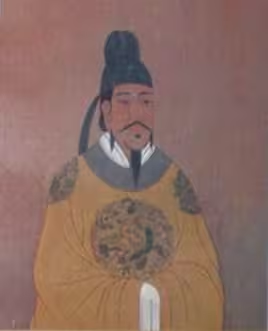
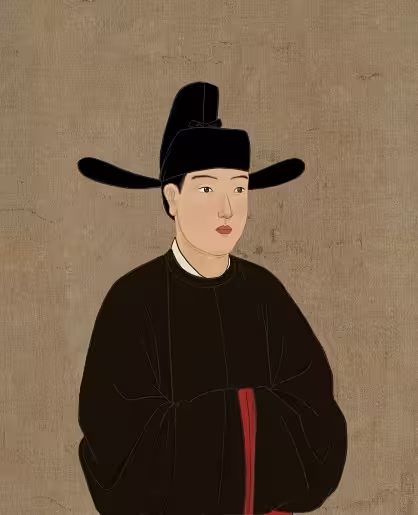
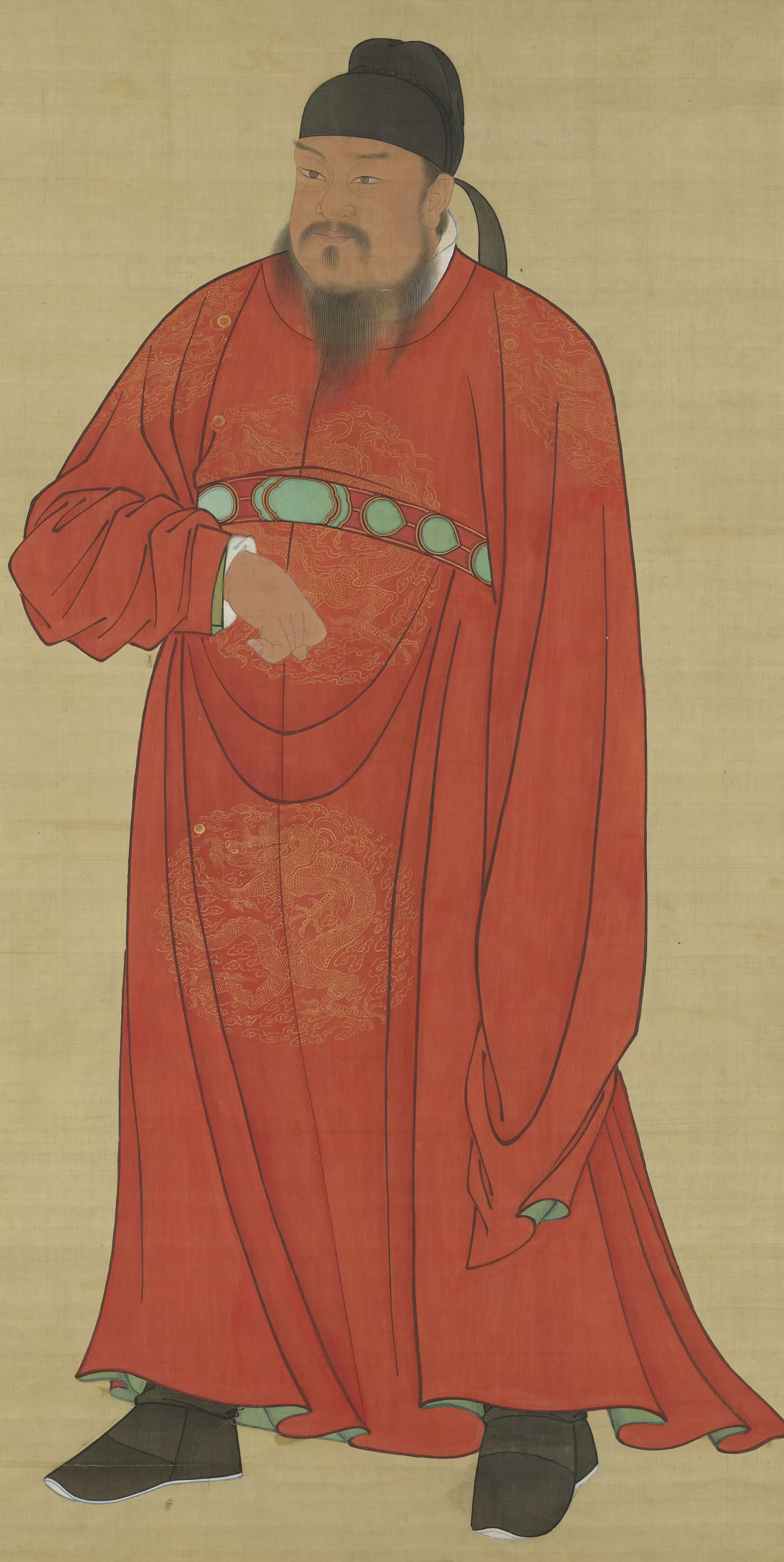
Emperor Jingzong of Tang (22 July 809 – 18 December 826), personal name Li Zhan, was the thirteenth emperor of the Tang dynasty, crowned at fourteen on his father’s sudden death and murdered by his own companions at seventeen. His two-year Baoli reign is the shortest full reign between 806 and 840, and its violence set a new benchmark in the dynasty’s accelerating decay: Jingzong was the first Tang emperor since the founding generation to be killed by the palace’s own servants, and the speed of the killing — over a drunken game, in the dark, by the teenagers he played with — announced that the throne was now anyone’s within reach of a candle-snuffer.
He left no policy to judge and no heir to mourn him; his historical function is almost purely diagnostic. The symptoms he displayed — a child sovereign, a bought and bullied court, a chancellery passing between feuding patrons, an army that obeyed eunuchs — were the symptoms of the whole late Tang body politic.
Reign & Achievements
A clean accession, at least. For all its ugliness, the succession of February 824 went by the book: Muzong’s eldest son was named crown prince on his father’s death and enthroned without an armed dispute — the last such orderly father-to-son transfer until the dynasty’s end. The veteran statesman Pei Du, summoned back as chancellor in the boy’s first year, lent the court a few months of borrowed gravity.
The restoration of examination prestige. Under the Baoli examiners — notably 825’s board, which included upright scholars — the jinshi lists regained a measure of credibility after the scandal of 821, and the court’s literary culture continued to flourish around the throne even as the throne itself paid it no attention. Jingzong’s reign produced no reforms; it produced, almost incidentally, a generation of poets.
controversies & Failures
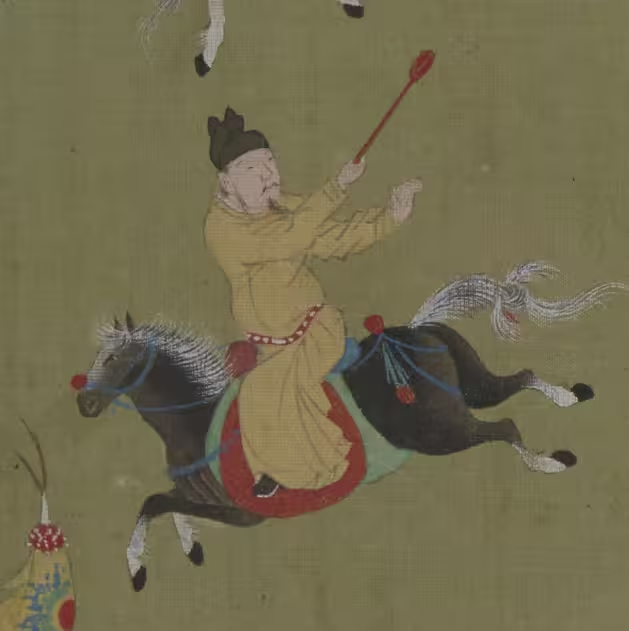
The government of a dormitory. The emperor’s day began at dusk: drinking, music, and above all polo and the fox-hunt after dark — the famous “night hunts” (打夜狐), in which the boy and his eunuch companions, torches and bows, ranged the palace grounds until morning. Daytime audiences were canceled or slept through; remonstrators were answered with laughter or, on occasion, exile. The court’s memorials of the Baoli years are a unique genre: solemn ministers begging a seventeen-year-old to stop hunting foxes in the dark, and being ignored in terms that suggest the petitions were read aloud at the drinking table for entertainment.
The companions and the chancellors. Around the throne clustered a camarilla of young eunuchs — his “playmates,” of whom the chief was Liu Keming — and around the chancellery, the faction-boss Li Fengji, whose venality made the court’s business a matter of tariffs. Between the two circles the emperor floated, arbitrating nothing. When the elderly Pei Du remonstrated, the camarilla whispered him into retirement.
The assassination (826). On the night of 18 December 826, after an evening of polo and drinking with Liu Keming and a party of young guardsmen and companions, the seventeen-year-old emperor retired to change clothes. The lamps were put out. He was killed in the dark by the hands he had played with for two years. The conspirators tried to enthrone a puppet prince, Li Wu; within days the Shence commanders crushed the coup, killed Liu Keming and the puppet, and installed the dead emperor’s younger brother, the Jiang prince Li Han — the future Wenzong — whom they judged manageable. The diagnosis Jingzong’s death delivered: the Shence Armies were now the sole institution that mattered at an accession.
The Defining Trait: The Boy on the Thimble
Jingzong’s defining trait was the absolute sovereignty of play: a child emperor who possessed, in theory, the most absolute power on earth and used it exclusively to schedule his next game. Later historians treated his death less as a tragedy than as a demonstration — the dynasty’s first proof that the palace could no longer protect even the person it was built to serve.
Anecdotes & Folklore
- “The dead emperors of Mount Li.” When Jingzong insisted on an excursion to the Huaqing hot springs, the remonstrator Zhang Quanyi recited the roster of sovereigns who had died or fallen there — King You of Zhou, the First Emperor, Xuanzong, and the emperor’s own grandfather Xianzong — and begged him not to go. The emperor laughed it off and went anyway. Courtiers noted at the time that the laugh sounded thin. The Zizhi Tongjian preserves the exchange, one of the age’s small masterpieces of ignored warning.
- The night foxes. The “night hunts” were conducted with professional thoroughness: beaters, nets, torches, rewards for the best shot. Eunuchs who failed to keep up were flogged; at least one senior attendant was beaten to the edge of death for a poor performance. The palace that housed the dynasty’s ceremonial heart, contemporaries wrote, had become a hunting ground in every sense.
- “Cancel the morning.” The court records of the Baoli years register more canceled audiences than held ones; the memorial begging the emperor to rise “so that the four quarters may see the sun” became a set piece of the period’s prose. Jingzong’s reply, on the one occasion he answered directly, was quoted with relish by the eunuchs: the sun could be seen perfectly well from the polo yard.
- The stolen night. The assassins’ coup was botched within hours — the conspirators had killed the boy but forgotten the army. The Shence regiments, roused by their eunuch commanders, took the palace back before dawn, and the men who had snuffed the candles were themselves dead by the week’s end. The throne passed to Wenzong without a single battle — the last time an imperial brother would succeed so quietly.
References & Historical Sources
- Jiu Tang Shu (旧唐书), juan 17 (Annals of Jingzong).
- Xin Tang Shu (新唐书), juan 8.
- Zizhi Tongjian (资治通鉴), juan 243 (the Baoli years and the assassination).
- Tang Huiyao (唐会要), juan on imperial excursions and audiences.
- Michael T. Dalby, “Court Politics in Late T’ang Times,” in Cambridge History of China, vol. 3.
- 岑仲勉 (Cen Zhongmian), 隋唐史 — on the Baoli court and the Liu Keming coup.